
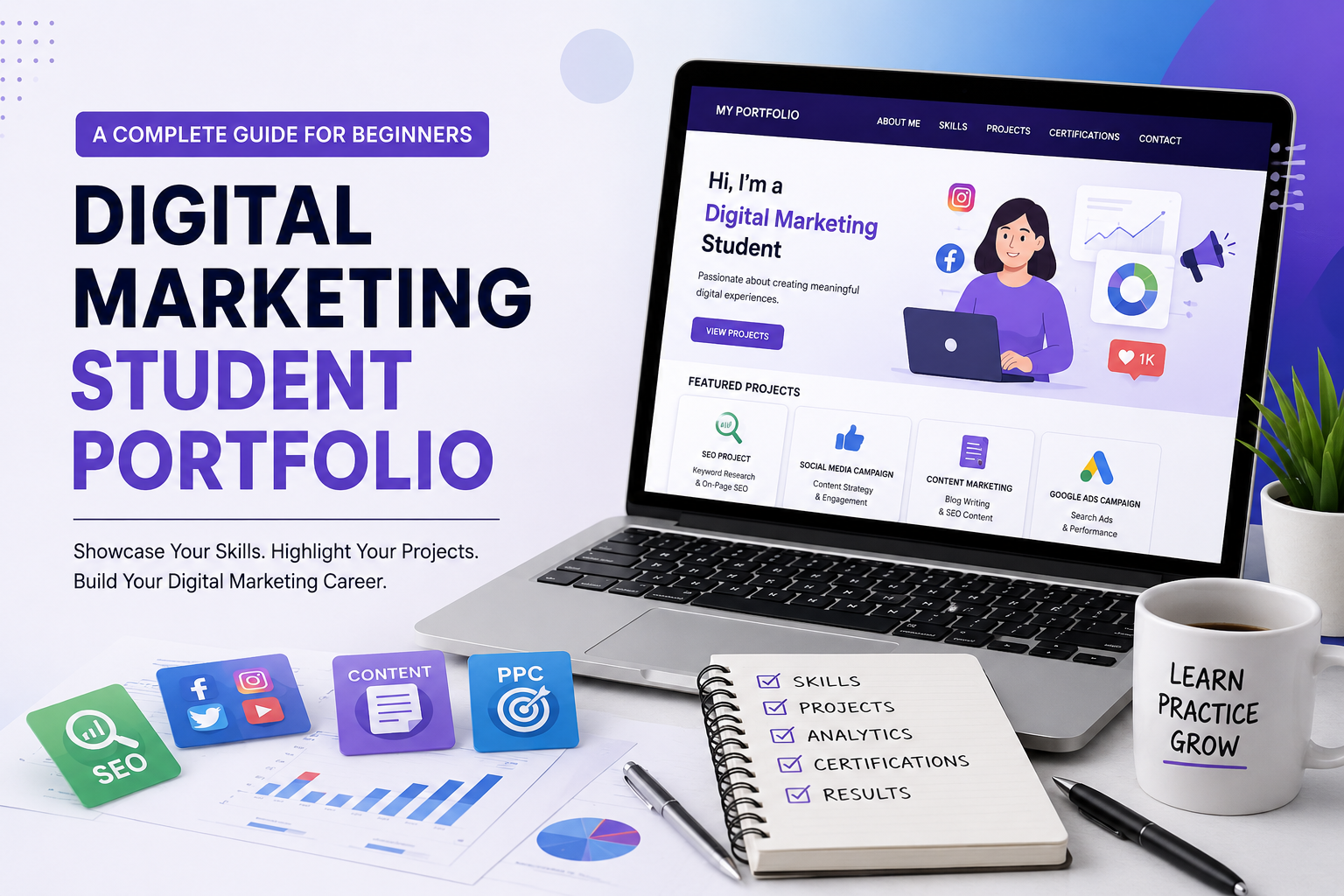
 Starting a career in digital marketing can be exciting, but it can also feel confusing when you are a beginner. You may have learned about SEO, social media marketing, content marketing, email marketing, Google Ads, and other digital marketing concepts. But how can you show potential employers or clients what you can actually do?A Digital Marketing Portfolio is one of the best ways to showcase your knowledge, skills, projects, creativity, and learning journey in one place.You do not need years of professional experience to create a strong portfolio. As a student, you can include academic projects, practice campaigns, sample content, SEO projects, social media posts, website projects, certifications, and other work you have completed during your learning journey.In this guide, we will explore what a digital marketing portfolio is, why you need one, what to include, and how to create a professional portfolio as a beginner
What Is a Digital Marketing Portfolio?
A Digital Marketing Portfolio is a collection of your digital marketing work, skills, projects, achievements, and experiences. It allows you to demonstrate your abilities instead of simply listing them on a resume.
For example, instead of saying that you know SEO, you can show a keyword research project you completed. Instead of saying that you understand social media marketing, you can show a sample Instagram content strategy.
Your portfolio acts as proof of your practical knowledge.
It can be created as a personal website, PDF document, online portfolio, or a combination of different platforms. A personal website is particularly useful because it allows you to build your own online presence while demonstrating your digital marketing skills.
Why Do Digital Marketing Need a Portfolio?
A resume tells people about your qualifications, but a portfolio can show what you can do.
This is especially important for beginners because you may not have extensive professional experience yet. A portfolio gives you an opportunity to demonstrate your skills through practical examples.
A good portfolio can also help you stand out from other students applying for internships and entry-level positions.
For example, if two students have similar educational backgrounds, the student who can show real SEO research, social media content, website optimization, or campaign examples may have an advantage.
Your portfolio also shows initiative. Creating a website and presenting your work professionally demonstrates that you are serious about developing your digital marketing career.
What Should You Include in a Digital Marketing Portfolio?
Your digital marketing portfolio does not need to contain hundreds of projects. A few well-presented projects can be more valuable than many unfinished examples.
Here are the important sections you can include.
1. About Me
The About Me section introduces you to visitors.
Keep it simple and professional. Mention that you are studying digital marketing, your areas of interest, and what you are currently learning.
For example:
“I am a digital marketing student passionate about SEO, content marketing, social media marketing, and creating engaging digital experiences. I am developing my practical skills through personal projects, learning activities, and real-world marketing experiments.”
You can also mention your career goal.
For example, you may want to become an SEO specialist, social media marketer, content marketer, PPC specialist, or digital marketing executive.
Your About Me section should feel personal rather than looking like a copied professional description.
2. Digital Marketing Skills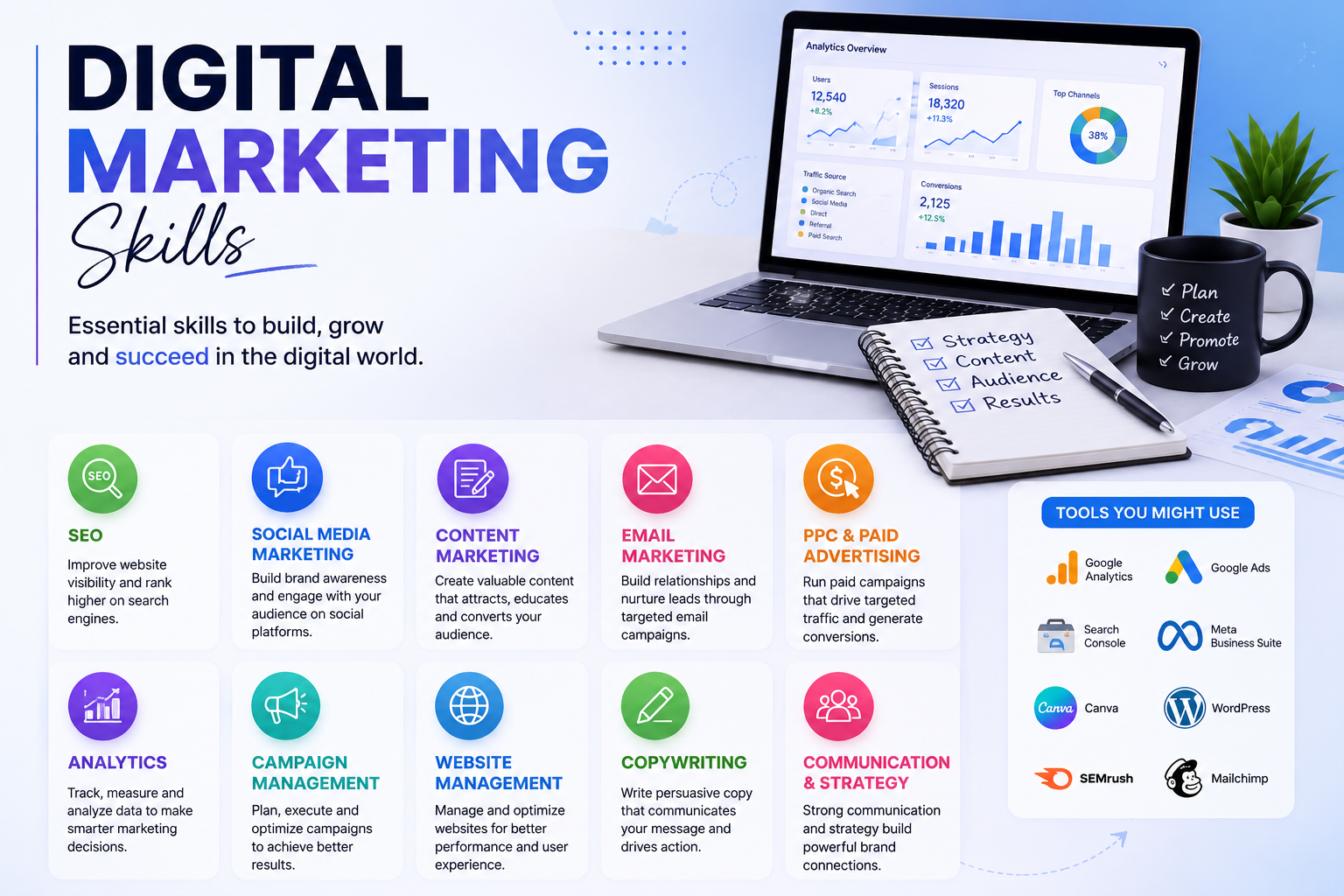
Create a dedicated section to showcase your skills.
You can divide your skills into different categories.
SEO
Include skills such as:
- Keyword research
- On-page SEO
- Technical SEO basics
- Internal linking
- Meta title and description optimization
- Content optimization
- SEO audits
- Search intent
Social Media Marketing
You can mention:
- Instagram marketing
- Facebook marketing
- Content planning
- Hashtag research
- Social media captions
- Reels strategy
- Audience engagement
- Social media analytics
Content Marketing
Include:
- Blog writing
- Content research
- Content planning
- Copywriting
- SEO content writing
- Social media content creation
Paid Advertising
If you have learned PPC, you can include:
- Google Ads
- Meta Ads
- Keyword targeting
- Campaign planning
- Ad copywriting
- Audience targeting
Only list skills that you actually understand or have practiced.
3. Your Digital Marketing Projects
The Projects section is one of the most important parts of your digital marketing portfolio.
You can include projects completed during your digital marketing course or projects you created independently.
For example, you could create an SEO project for a fictional business.
Your project could include:
Project: SEO Strategy for a Local Business
Objective: Improve the website’s organic search visibility.
Work completed:
- Keyword research
- Competitor analysis
- On-page SEO recommendations
- Meta title optimization
- Internal linking suggestions
- Blog topic research
You can show screenshots or examples of your work where appropriate.
This makes your portfolio more convincing because visitors can see your process.
4. SEO Portfolio Project
SEO is an important digital marketing skill, so consider creating a separate SEO project.
You could choose a website and perform a basic SEO analysis.
Start by researching relevant keywords.
For example, if the website is about digital marketing, you could research keywords such as digital marketing portfolio, digital marketing student portfolio, digital marketing skills, and digital marketing projects.
Then analyze the search intent behind those keywords.
You can create recommendations for titles, headings, content, internal links, and meta descriptions.
You can also demonstrate your understanding of tools such as Google Search Console, Google Analytics, Rank Math, or keyword research tools if you have practiced using them.
5. Social Media Marketing Project
Social media is another excellent area for a student portfolio.
Create a sample social media campaign for a fictional brand.
For example, imagine that you are managing social media for a small bakery.
You could create:
- Instagram posts
- Reels ideas
- Captions
- Hashtags
- Content calendar
- Audience persona
- Campaign objectives
You can explain why you selected each type of content.
For example, educational content may be used to build trust, while entertaining Reels may be used to increase reach.
This shows that you understand the strategy behind social media marketing rather than simply creating attractive posts.
6. Content Marketing Project
Content marketing is another valuable skill to demonstrate.
Create a sample blog article targeting a specific keyword.
For example, you could write a blog about AI marketing strategies or digital marketing for beginners.
Show the keyword you targeted, the intended audience, search intent, article structure, and SEO elements.
You can also include screenshots of your published articles if you have a website.
This demonstrates your ability to combine writing with SEO.
7. Certifications
Certifications can strengthen a beginner’s portfolio.
If you have completed digital marketing courses or certifications, create a Certifications section.
You can include certifications related to:
- SEO
- Google Analytics
- Google Ads
- Social media marketing
- Content marketing
- Email marketing
- Digital marketing fundamentals
Add the certification name, organization, and completion date.
If possible, include a link to verify the certificate.
However, certifications should support your portfolio rather than replace practical projects.
8. Tools You Know
Digital marketers use many tools to research, create, analyze, and optimize campaigns.
Create a section showing the tools you have experience with.
For example:
- Google Analytics
- Google Search Console
- Google Ads
- Canva
- WordPress
- Elementor
- Rank Math
- Meta Business Suite
- Keyword research tools
Do not claim advanced knowledge if you have only used a tool once.
Instead, you can describe your level honestly.
For example:
Google Search Console – Beginner
WordPress – Intermediate
Canva – Intermediate
Being honest makes your digital marketing portfolio more professional.
9. Results and Analytics
Whenever possible, show measurable results.
For example, if you created social media content, you can show impressions, reach, engagement, or follower growth.
If you worked on a website, you could show changes in traffic, clicks, rankings, or other relevant metrics.
As a beginner, you may not have impressive numbers yet. That is completely fine.
You can show project objectives and explain what you learned.
For example:
“The goal of this project was to improve organic visibility by targeting relevant long-tail keywords and optimizing on-page elements.”
The learning process itself can demonstrate your skills.
10. Resume
Adding your resume to your portfolio makes it easier for recruiters to understand your background.
Your resume should include:
- Name
- Professional introduction
- Education
- Digital marketing skills
- Certifications
- Projects
- Experience, if any
- Contact information
Keep the design simple and easy to read.
Make sure your resume and digital marketing portfolio contain consistent information.
11. Contact Section
Your portfolio should make it easy for people to contact you.
Include relevant contact information such as your professional email address and social media or professional networking profile.
You can write a simple message such as:
“Interested in working together or discussing a digital marketing opportunity? Feel free to contact me.”Contact
If you have a LinkedIn profile, you can include it as well.
How to Create a Digital Marketing Student Portfolio
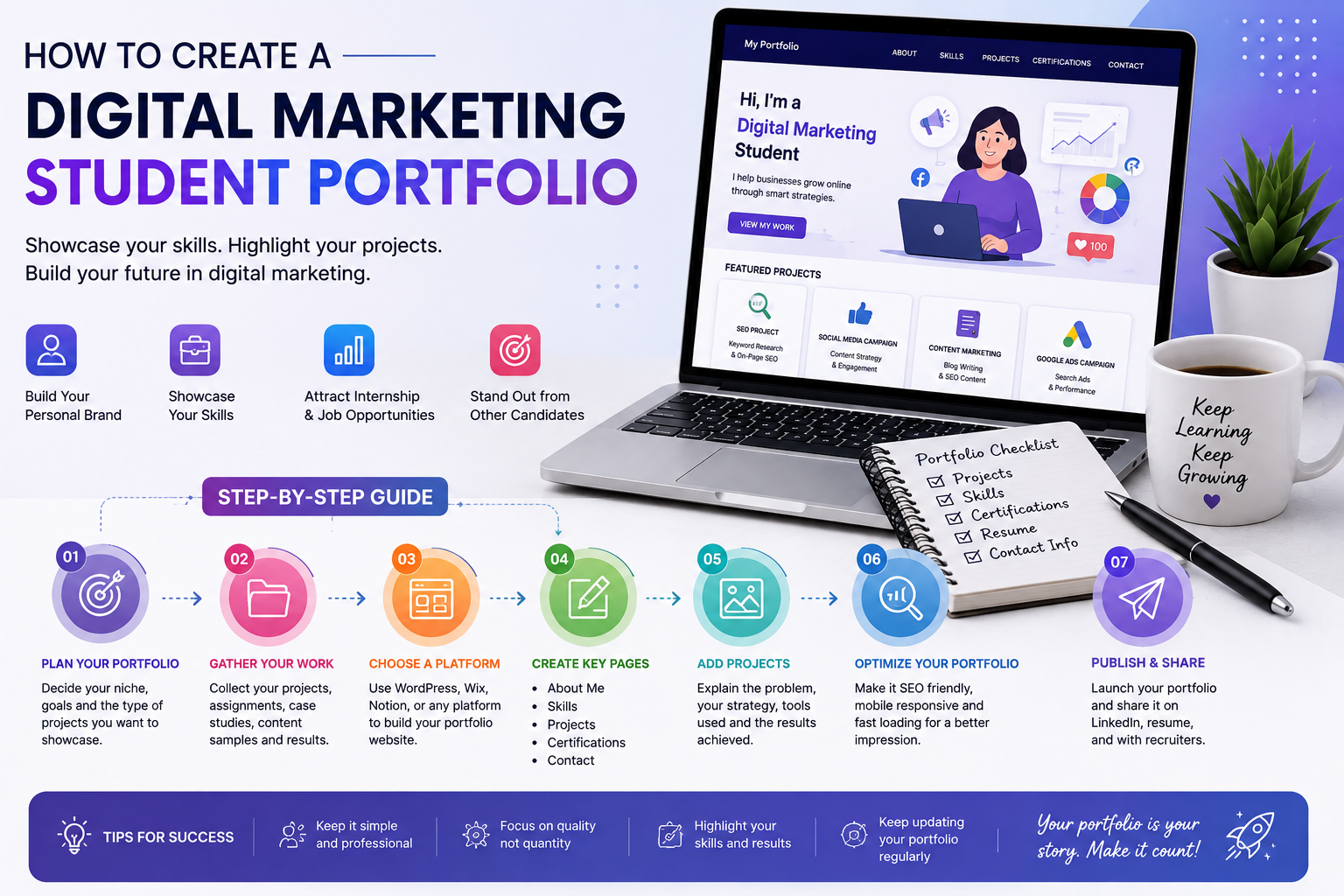
Creating your digital marketing portfolio does not have to be complicated.
Start by selecting a platform.
A personal WordPress website is a good option because you can customize the design and demonstrate your website management skills.
Create the main pages first.
A simple structure could be:
Home → About → Skills → Projects → Certifications → Resume → Contact
Then add your content to each section.
Keep the design clean and professional.
Avoid adding too many animations, colors, fonts, or unnecessary elements. Your work should be the main focus of the website.
Create Projects Even If You Have No Experience
One of the biggest challenges beginners face is thinking:
“I cannot create a portfolio because I have no professional experience.”
This is not true.
You can create your own practice projects.
For example, choose a local business, fictional company, personal website, or imaginary brand and create a complete digital marketing strategy for it.
You could create an SEO audit, social media calendar, content plan, email campaign, or Google Ads strategy.
Clearly label these as practice projects or personal projects.
This allows you to demonstrate your knowledge without pretending that you worked for a real client.
Make Your Portfolio Search Engine Friendly
Since you are studying digital marketing, your digital marketing portfolio itself can become an SEO project.
Use relevant keywords naturally throughout your website.
For example, your homepage could target Digital Marketing Portfolio.
Other pages can target related terms such as digital marketing skills, SEO projects, content marketing projects, and social media marketing portfolio.
Create descriptive page titles and headings.
Write useful content instead of filling pages with keywords.
You can also use internal links to connect related pages.
For example, your SEO project page can link to your Skills page, while your content marketing project can link back to your SEO skills.
Optimize Your Portfolio for Mobile
Many people browse websites using smartphones.
Therefore, your portfolio should work well on mobile devices.
Check whether your text is easy to read, images load properly, buttons are easy to click, and sections are displayed correctly.
A mobile-friendly website also provides a better user experience.
If you are using WordPress and Elementor, preview your website on desktop, tablet, and mobile before publishing.
Keep Your Portfolio Updated
Your digital marketing portfolio should grow as your skills grow.
When you complete a new project, add it to your Projects section.
When you complete a new certification, update your Certifications section.
You can also remove old projects that no longer represent your best work.
Think of your portfolio as an evolving record of your digital marketing journey.
Common Mistakes to Avoid
There are several mistakes beginners should avoid when creating a digital marketing portfolio.
Adding Too Much Information
A digital marketing portfolio does not need to contain every detail about your life.
Focus on information that is relevant to digital marketing.
Using Unfinished Projects
Only publish work that you are comfortable showing.
Make sure your projects are organized and presented professionally.
Copying Someone Else’s Portfolio
You can take inspiration from other portfolios, but your portfolio should represent your own personality, skills, and experience.
Claiming Skills You Do Not Have
Avoid listing every digital marketing skill just because you have heard about it.
Instead, focus on skills you have actually studied or practiced.
Ignoring Mobile Design
Always check your website on different screen sizes.
Forgetting Contact Information
A recruiter or potential client should not have to search for a way to contact you.
How to Make Your Portfolio Stand Out
Your portfolio does not need an expensive design to be impressive.
What matters most is clarity, creativity, and evidence of your skills.
Show your process.
Instead of simply writing “SEO Project,” explain what you researched, what problem you identified, what strategy you created, and what you learned.
Use screenshots where appropriate.
For example, you could show keyword research, website optimization, social media designs, content calendars, or analytics screenshots.
This makes your digital marketing portfolio more interesting and demonstrates practical knowledge.
Final Thoughts
Creating a Digital Marketing Portfolio is an important step toward building your digital marketing career.
You do not need years of professional experience to start.
Your digital marketing portfolio can begin with small projects and gradually become stronger as you gain more knowledge and practical experience.
Include your introduction, skills, projects, certifications, tools, resume, and contact information. Demonstrate what you have learned through practical examples rather than simply listing skills.
Most importantly, keep learning and updating your digital marketing portfolio.
Every SEO experiment, blog article, social media campaign, website project, or marketing assignment can become part of your professional journey.
A well-designed portfolio can help you demonstrate your potential to employers, clients, and internship opportunities.
Start with what you know, show what you can do, and keep improving your digital marketing portfolio as you grow as a digital marketer.